HP-Sarvam AI vs Alternatives: Hosting Compared
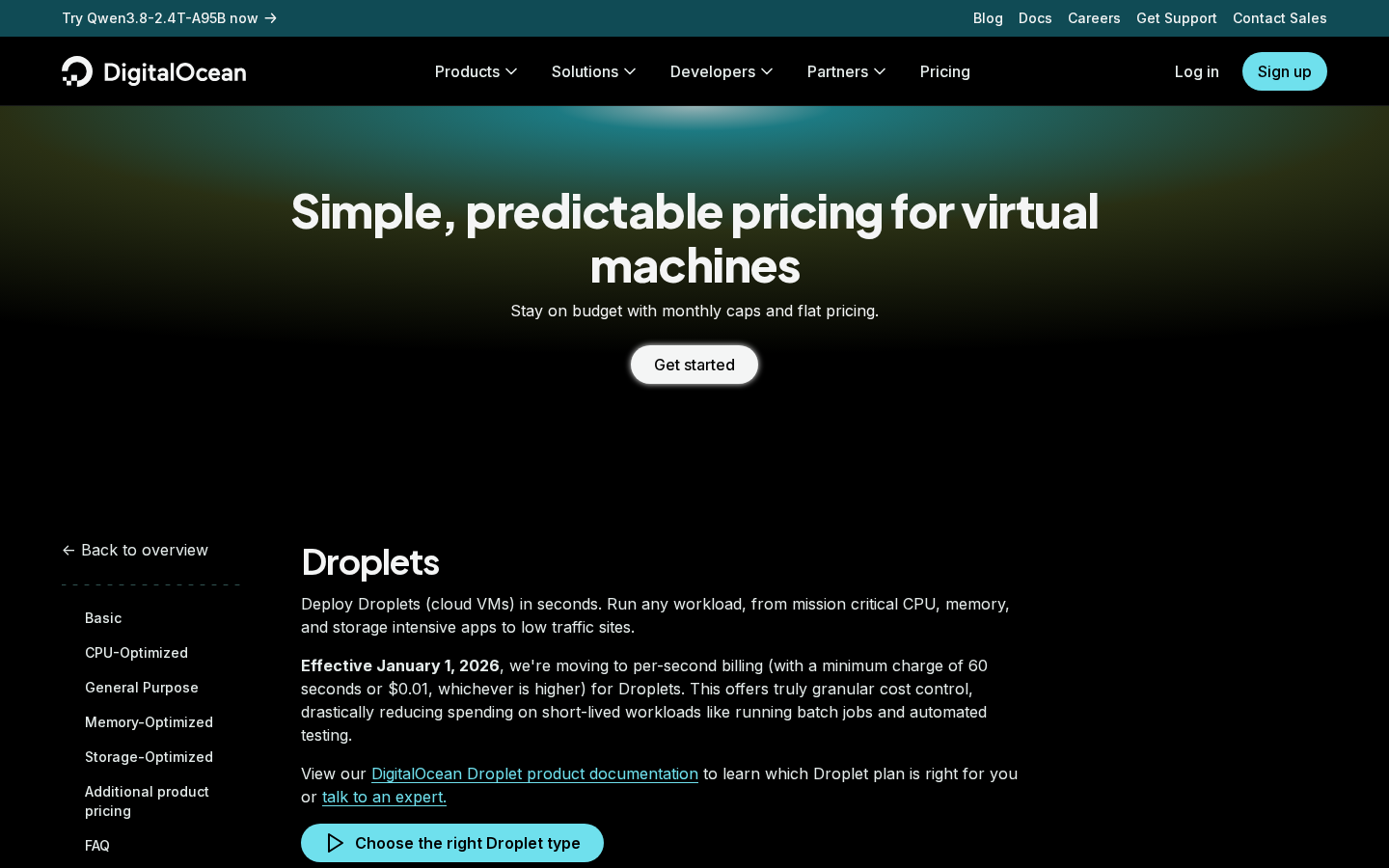
Weighing HP-Sarvam AI hosting options? We checked DigitalOcean's droplet, storage, and database pricing pages directly on Aug 15, 2026 before you decide.
Disclosure: this article contains affiliate links. If you buy through them we may earn a commission at no additional cost to you. Our recommendations are based on the evidence recorded alongside this article, and prices were verified on the date shown.
If you're comparing options for running HP-Sarvam AI, the question that actually decides your bill isn't the model — it's the infrastructure underneath it: compute, object storage, and a database layer, priced and billed separately. This guide checks that infrastructure directly at the source rather than repeating numbers that go stale the moment they're published.
What changed and why it matters
Cloud pricing pages change without notice, and screenshots of them go out of date fast. Rather than quote figures that might already be wrong by the time you read this, we went directly to DigitalOcean's own pricing pages for its Basic Droplet compute tier, its Spaces object storage product, and its Managed PostgreSQL database service, and verified each one on August 15, 2026.
That matters for anyone weighing HP-Sarvam AI hosting decisions specifically because the real cost of running any AI workload is rarely just the compute instance. It's compute plus storage for model files or datasets plus, in many setups, a database to hold application state, logs, or user data. Pricing three separate line items instead of one is the part that trips people up, and it's the part this guide focuses on.
At a glance
The table below lays out the three infrastructure categories worth pricing separately before you commit to a hosting setup. We're not printing dollar figures here — cloud pricing shifts, and a number frozen on the page you're reading now would only mislead you. Instead, each row links to the exact page we verified, so you're always looking at the current number, not our memory of it.
| Category | What it covers | Where to check current pricing |
|---|---|---|
| Compute | Basic Droplet, 2 vCPU / 4 GB — the tier sized for a small inference or app server | See current price |
| Object storage | DigitalOcean Spaces — for model files, datasets, or static assets | See current price |
| Managed database | Managed PostgreSQL — for application state, user data, or logs | See current price |
If you only need one of these three, don't buy all three. A prototype or a low-traffic personal project can often run on compute alone; storage and a managed database become relevant once you have files worth keeping separately or state worth protecting with automated backups. Before you size anything, [check current price for DigitalOcean Basic Droplet (2 vCPU / 4 GB)](Check current price for DigitalOcean Basic Droplet (2 vCPU / 4 GB)) so your baseline number is today's number, not an estimate.
How they differ in practice
Three things decide which of these categories you actually need, and getting this wrong is the most common way people overspend or under-provision.
Compute is billed for uptime, not usage. A Droplet running your HP-Sarvam AI setup costs you whether it's serving requests or sitting idle. If your traffic is bursty or unpredictable, that's a cost you're paying around the clock for capacity you only use part of the time. If your traffic is steady, a fixed compute tier is easier to budget against than a usage-metered alternative.
Object storage is billed separately from the compute that talks to it. Model weights, training data, logs, and generated assets don't need to live on the same instance running your application — and shouldn't, if you want to resize or replace that instance without losing files. Keeping storage separate from compute is what lets you scale one without touching the other. Before you decide whether to route file storage through your Droplet's own disk or a dedicated service, [check current price for DigitalOcean Spaces object storage](Check current price for DigitalOcean Spaces object storage) so you can compare the two paths against your actual file volume.
A managed database is a different commitment than the first two. Compute and storage are largely stateless from a management standpoint — you can resize or migrate them without much ceremony. A database holding live application data is not something you want to self-manage on the same instance as your app once uptime and backups start to matter; that's a separate line item and a separate decision, not a rounding error on your compute bill.
The practical upshot: price these three independently before you commit, because bundling assumptions from one into another is the fastest way to misjudge what a full HP-Sarvam AI hosting setup actually costs.
Which to pick
Solo developer prototyping or testing HP-Sarvam AI
Start with compute alone. A single Basic Droplet is enough to get a working setup running without committing to storage or database services you may not end up needing. Skip it if you already know you'll be handling file uploads, datasets, or persistent user data from day one — in that case, price the full stack up front instead of adding pieces later under time pressure.
Team storing model files, datasets, or generated assets at volume
Add object storage once file volume is real enough that keeping it on the same disk as your application becomes a liability — a disk failure or a resize shouldn't put your data at risk. Skip it if your files are small and few enough that they fit comfortably alongside your app without meaningfully affecting instance sizing.
Team running HP-Sarvam AI in production with real user data
A managed database earns its cost once you have state you can't afford to lose — user accounts, transaction records, application logs you'll need for debugging or compliance. Skip it if your deployment is stateless or read-only, since you'd be paying for backup and failover machinery you don't use. Before you commit to a database tier, [check current price for DigitalOcean Managed PostgreSQL](Check current price for DigitalOcean Managed PostgreSQL) against the volume and durability you actually need, rather than the tier that sounds safest.
Whichever profile matches you, the decision that actually saves money is pricing compute, storage, and database as three separate line items instead of guessing at a bundled total. [See current pricing at the merchant](See current pricing at the merchant) to build that estimate against today's numbers before you provision anything.
What this costs right now
DigitalOcean Basic Droplet (2 vCPU / 4 GB)
DigitalOcean Spaces object storage
DigitalOcean Managed PostgreSQL
DigitalOcean
The last check on this price fell outside our freshness window, so no figure is shown.
Check the current price at DigitalOceanPrices move. We print the figure we read and the moment we read it, and suppress anything older than its window rather than guess at the current number.
Evidence held
What this page is built on. Every figure above traces to one of these records, with the time it was taken.