
Spots

Minister proposes removing state protection from Soviet-era buildings

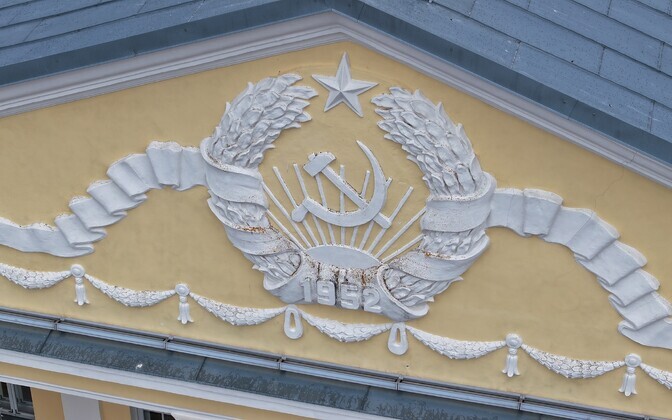
Justice Minister Liisa-Ly Pakosta (Eesti 200) has proposed allowing buildings bearing occupation symbols erected between 1940 and 1991 to be removed from state heritage protection. Estonia was under Soviet, the Nazi and then Soviet occupation again through that entire time span.

The minister's proposal aims to break a deadlock

The minister's proposal aims to break a deadlock over legislation on "Red" monuments that has stalled since a presidential veto in 2023, and would give owners more freedom over the buildings.

Pakosta noted in her proposal sent to the

Pakosta noted in her proposal sent to the government that there had been no progress since March 2025 on the bill implementing the Building Code currently under consideration by the Riigikogu Economic Affairs Committee.

In an attempt to address the situation, Pakosta

In an attempt to address the situation, Pakosta has proposed a new approach. "To resolve the prolonged deadlock in the consideration of the bill and create a clear legal basis for removing buildings bearing occupation symbols or inciting hatred from state protection, I sent a proposal to the Riigikogu in July in which I suggested amending Section 10 of the Heritage Conservation Act with an exception under which buildings and structures erected during the period of Estonia's occupation and bearing occupation symbols would not be placed under state protection," Pakosta noted.

The minsiter proposed adding the following paragraph to

The minsiter proposed adding the following paragraph to the bill: "Buildings erected while Estonia was occupied from June 16, 1940 to August 20, 1991 which incite hatred or whose text, symbols, imagery or other form express support for an occupation regime, an act of aggression, genocide, a crime against humanity or a war crime shall not be placed under state protection."

The minister justified her proposal by saying that

The minister justified her proposal by saying that objects of cultural value should represent the most valuable part of Estonia's cultural heritage.

"Such buildings that were erected while Estonia was

"Such buildings that were erected while Estonia was occupied and that incite hatred or express support for an occupation regime or the commission of an act of aggression, genocide, a crime against humanity or a war crime do not belong among the most valuable parts of cultural heritage," Pakosta said.

The entry into force of the legislative amendment

The entry into force of the legislative amendment would give building owners a free hand to decide what to do with the building next.

"After the amendment, the minister responsible for the

"After the amendment, the minister responsible for the field, on the basis of the provision of the Heritage Conservation Act under which monument status may be revoked if a monument does not meet the criteria for state protection, and after hearing the opinion of the Heritage Council, may by directive revoke the monument status of a building that does not meet the criteria for state protection. The owner of the building would then be able to decide its future, for example by removing or covering up occupation symbols," the minister clarified.

"I believe the proposed amendment offers the necessary

"I believe the proposed amendment offers the necessary solution to the long-stalled bill and will help ensure clear regulation concerning occupation symbols in public space," Pakosta said.

News

Minister proposes removing state protection from Soviet-era buildings

Justice Minister Liisa-Ly Pakosta (Eesti 200) has proposed allowing buildings bearing occupation symbols erected between 1940 and 1991 to be removed from state heritage protection.

@spots #europe
Source: ERR News
See more like this