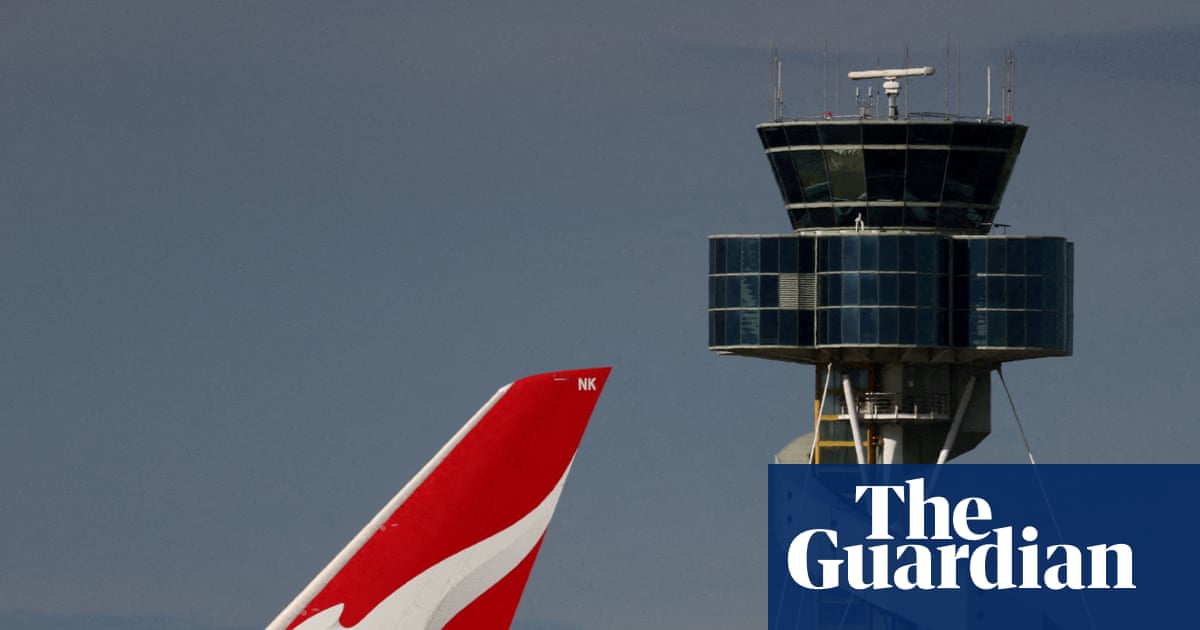
Concern over Sydney airport as near misses and runway incursions at 20% above…
Australian Transport Safety Bureau investigating staffing gaps as key factor in four incidents in July and August
 Spots
Spots Australian Transport Safety Bureau investigating staffing gaps as key factor in four incidents in July and August

Modelling by Sydney airport’s air traffic control operators predicted elevated fatigue risks for staff at the time of a series of major safety incidents, with a review identifying runway incursions and near misses at 20% above national averages.
Staffing gaps at Sydney airport are being investigated as a key factor in four incidents in July and August this year, according to the investigating authority, the Australian Transport Safety Bureau [ATSB].
Angus Mitchell, the ATSB chief commissioner, released preliminary investigation reports on Wednesday that confirmed staffing levels had “emerged as a recurring area of enquiry”.
Air Services Australia, which operates the tower, had predicted fatigue risks for staff at the time of the incidents as part of roster modelling processes.
While fatigue risk does not necessarily mean individual air traffic controllers are tired at the time of an incident, the effectiveness of measures to manage any risk is being queried.
Investigators will consider whether staff combining operational roles contributed to the incidents, along with routine reliance on overtime to fill shifts and training and supervision being conducted alongside normal duties.
“Nationally, over the decade, reported ground confliction [incident] rates have remained broadly steady,” Mitchell said.
“However, Sydney recorded the highest confliction rate per aircraft movement post-Covid among the major airports, about 20% above the national average. “This should be viewed in the context of Sydney airport being the most complex in the country.”
The four incidents include a near miss on 27 July, when a Qantas Boeing 737 was cleared by controllers to cross in front of a Qantaslink Dash 8.
Australian Transport Safety Bureau investigating staffing gaps as key factor in four incidents in July and August